

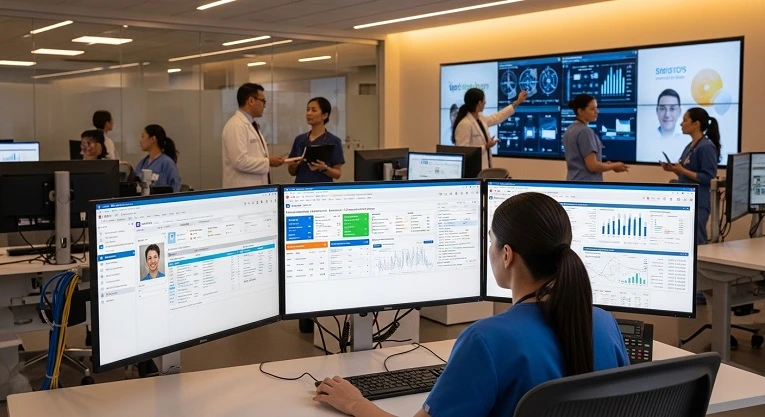
Epic Healthcare Software
Epic Healthcare Software is one of the leading solutions in the healthcare technology industry, widely recognized for its comprehensive electronic health record (EHR) and electronic medical record (EMR) capabilities. Hospitals, clinics, and health systems rely on Epic software to streamline clinical workflows, enhance patient engagement, and improve operational efficiency.
In today’s fast-paced healthcare environment, choosing the right EHR system can make the difference between a fragmented, error-prone workflow and a well-integrated, efficient healthcare delivery system. This guide explores the features, benefits, and best practices for implementing Epic healthcare software in hospitals and clinics, offering insights for healthcare administrators, IT teams, and clinical professionals.
What is Epic Healthcare Software?
Epic healthcare software is a comprehensive EHR and health IT platform designed to manage patient data, clinical workflows, administrative tasks, and reporting across healthcare organizations. Unlike a simple EMR, Epic provides a unified healthcare platform that integrates clinical, operational, and financial data, enabling healthcare professionals to make informed decisions in real time.
Epic’s EHR system supports hospitals of all sizes, from small outpatient clinics to large health systems, and is used by clinicians, administrators, and IT professionals. Its interoperability standards, including FHIR and HL7, allow secure sharing of patient data between different healthcare providers, supporting coordinated care and population health management.
Historical context: Epic Systems Corporation was founded in 1979 and has grown to become a dominant player in the EHR market, serving thousands of healthcare organizations globally. The platform’s adoption continues to grow as hospitals seek solutions that improve patient care, workflow efficiency, and regulatory compliance.
Core Features of Epic Healthcare Software
Epic healthcare software is known for its robust EHR features, advanced analytics, and customizable modules. Key features include:
Patient Records & EHR Management
Epic’s centralized EHR system allows clinicians to access complete patient records, including medical history, lab results, medications, and imaging. This functionality reduces errors, saves time, and enhances patient care.
Clinical Decision Support
Epic provides tools for clinical decision support, alerting providers to potential drug interactions, abnormal lab values, or care gaps. These tools help healthcare teams make more accurate, evidence-based decisions.
Billing & Revenue Cycle Management
Epic software streamlines administrative workflows, from scheduling to claims processing. Its revenue cycle management tools help hospitals optimize billing, reduce denials, and improve financial performance.
Interoperability & Data Exchange
Epic supports health information exchange (HIE) and integrates with third-party software, enabling secure data sharing between hospitals, clinics, and laboratories. This interoperability is critical for coordinated patient care and population health initiatives.
Telehealth Integration
With the rise of remote care, Epic supports telehealth solutions that allow providers to conduct virtual visits, track patient progress remotely, and maintain complete records.
Patient Engagement Portals (MyChart)
Epic’s MyChart portal empowers patients to access their health records, schedule appointments, communicate with providers, and track their care plans, improving engagement and satisfaction.
Analytics & Reporting Dashboards
Epic healthcare software includes analytics and reporting tools that allow hospitals to monitor performance, measure outcomes, and identify opportunities for improvement. These tools support population health management and strategic planning.
Specialized Modules
Epic offers modules for specific clinical areas and organizational needs:
- Ambulatory care: Optimized workflows for outpatient settings.
- Acute & post-acute care: Comprehensive tools for inpatient care management.
- Behavioral health: Documentation, scheduling, and compliance tools.
- AI-assisted analytics: Predictive analytics for resource planning and patient risk assessment.
By customizing modules based on organizational needs, Epic ensures that hospitals and clinics can tailor the system for their workflows and patient populations.
Benefits of Using Epic for Healthcare Organizations
Implementing Epic healthcare software offers numerous advantages:
Improved Clinical Workflow Efficiency
By centralizing patient records and automating tasks, Epic reduces administrative burden and frees up time for providers to focus on patient care.
Enhanced Patient Engagement & Satisfaction
Portals like MyChart and mobile access allow patients to actively participate in their care, increasing adherence to treatment plans and overall satisfaction.
Data Security & HIPAA Compliance
Epic software adheres to strict security protocols, ensuring HIPAA compliance and safeguarding sensitive patient data.
Cost-Effectiveness & ROI
While Epic is a significant investment, its efficiency, reduced errors, and streamlined billing provide a positive return on investment (ROI) over time.
Population Health Management
Epic’s analytics tools support population health initiatives by identifying high-risk patients, tracking outcomes, and enabling targeted interventions.
Case Studies & Real-World Outcomes
Hospitals that have implemented Epic EHR report measurable improvements:
- Reduced charting errors by up to 30%
- Decreased patient wait times through optimized scheduling
- Improved clinical decision-making with integrated alerts and dashboards
These case studies demonstrate that Epic software not only streamlines operations but also enhances patient safety and quality of care.
Epic vs Competitors
Healthcare organizations often compare Epic with other EHR systems such as Cerner, Athenahealth, and Meditech.
- Epic vs Cerner: Epic offers more robust patient engagement tools and custom modules, while Cerner is often favored for cost-effectiveness in smaller hospitals.
- Epic vs Athenahealth: Athenahealth emphasizes cloud-based solutions, whereas Epic provides a full-suite integrated platform suitable for large health systems.
- Epic vs Meditech: Epic excels in interoperability and analytics, while Meditech focuses on simplicity and smaller healthcare facilities.
Highlighting these differences can help decision-makers choose the best software for their organization.
Implementation Best Practices
Successfully adopting Epic requires careful planning:
- Planning & Team Selection: Establish a cross-functional team including IT, clinical staff, and administration.
- Training & Certification Programs: Epic offers certification courses for clinicians, IT staff, and administrators to ensure proficiency.
- Data Migration Tips: Ensure accurate migration of historical patient records into the new system.
- Overcoming Common Challenges: Address workflow resistance and provide ongoing support during the transition.
FAQs About Epic Healthcare Software
- Is Epic cloud-based?
Epic offers both cloud and on-premise deployment options, giving organizations flexibility. - How much does Epic software cost?
Costs vary based on modules, organization size, and implementation complexity. - Who uses Epic software?
Hospitals, clinics, health systems, and individual providers rely on Epic for EHR management. - What are Epic EHR modules?
Modules include clinical care, billing, population health, and patient engagement tools. - How does Epic support telehealth?
Epic integrates telehealth solutions with patient records, allowing seamless virtual care.
Future Trends and Innovations
Epic continues to evolve with healthcare technology:
- AI & Machine Learning: Predictive analytics for patient risk assessment and resource planning.
- Mobile EHR Capabilities: Access patient records and manage workflows remotely.
- Interoperability Updates: Continuous improvements with FHIR and HL7 standards.
- Enhanced Analytics: Real-time dashboards for population health and hospital performance monitoring.
These innovations position Epic as a future-ready platform capable of adapting to the evolving needs of modern healthcare.
Conclusion
Epic Healthcare Software is a robust, feature-rich solution that empowers healthcare organizations to improve patient care, streamline operations, and enhance decision-making. With its centralized EHR system, customizable modules, and advanced analytics, Epic stands out as one of the most trusted platforms for hospitals, clinics, and health systems.
For healthcare administrators and decision-makers, understanding the features, benefits, and best practices of Epic software is critical for selecting a system that drives efficiency, compliance, and patient satisfaction. Investing in Epic EHR ensures a future-ready healthcare environment that prioritizes safety, data-driven care, and operational excellence.