

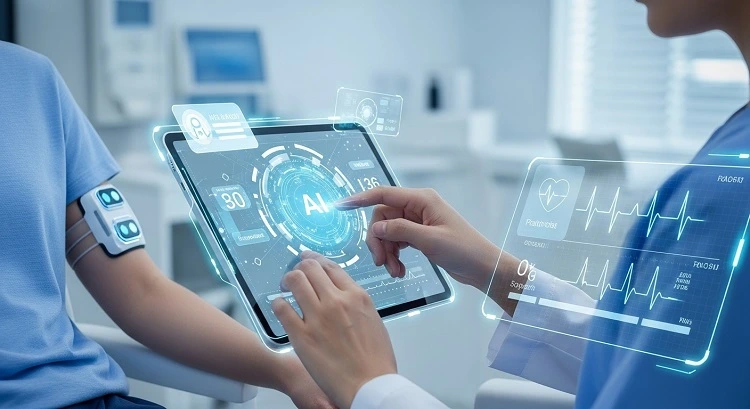
Artificial intelligence is rapidly reshaping the healthcare industry, and AI ber represents the growing intersection of AI-driven innovation and medical technology. From remote patient monitoring to real-time emergency response systems, AI-powered health solutions are changing how care is delivered, especially in critical and remote environments.
As healthcare systems worldwide face increasing pressure to improve efficiency, accuracy, and patient outcomes, AI-based technologies are emerging as a reliable solution for smarter and faster medical decision-making.
What Is AI Ber in Health Technology?
AI ber refers to the use of artificial intelligence combined with digital health tools to support medical professionals, first responders, and healthcare systems. These solutions often integrate:
- AI-powered data analysis
- Wearable health sensors
- Remote medical monitoring
- Real-time health data transmission
- Decision-support systems
The goal of AI-based technology is to assist human decision-making, reduce response times, and improve patient safety, especially in environments where immediate medical support is limited.
How AI Ber Improves Remote Medical Support
One of the most impactful applications of AI is in remote healthcare settings, such as aviation, maritime operations, rural healthcare, and emergency response.
Key Benefits Include:
- Real-time vital sign monitoring using wearable devices
- AI-assisted analysis of patient data to detect abnormalities
- Remote medical guidance for non-medical personnel
- Faster emergency decision-making
- Improved documentation and reporting accuracy
By combining AI with health technology, AI-based solutions help bridge the gap between patients and medical professionals when physical access is limited.
AI Ber and Wearable Health Technology
Wearable devices play a crucial role in AI-based systems. These devices collect essential health metrics such as heart rate, oxygen levels, blood pressure, and ECG data.
AI algorithms then:
- Analyze patterns in real time
- Detect early warning signs
- Provide alerts for medical intervention
- Support predictive healthcare decisions
This combination allows healthcare providers to respond proactively rather than reactively, improving overall patient outcomes.
AI Ber in Emergency and First Response Care
In emergency scenarios, time is critical. AI ber technology supports first responders by offering:
- Automated health data capture
- AI-driven risk assessment
- Secure data sharing with medical professionals
- Decision-support tools during emergencies
For industries like aviation and maritime operations, AI ber systems help crews manage medical incidents until professional healthcare support becomes available, reducing risks and improving safety.
The Role of AI Ber in Telemedicine
Telemedicine has become a vital component of modern healthcare, and AI ber enhances its effectiveness. AI-powered systems can assist clinicians by:
- Prioritizing patient cases
- Analyzing symptoms and vital data
- Supporting diagnosis and treatment planning
- Improving communication between patients and doctors
With AI ber integration, telemedicine becomes more accurate, efficient, and scalable, especially for remote or underserved populations.
Challenges and Ethical Considerations
While AI ber technology offers numerous advantages, it also comes with challenges:
- Data privacy and security concerns
- Regulatory compliance in healthcare systems
- Accuracy and bias in AI algorithms
- Dependence on technology in critical situations
Responsible implementation, transparency, and adherence to healthcare regulations are essential to ensure AI-based solutions remain safe and trustworthy.
The Future of AI Ber in Healthcare
The future of AI ber looks promising. As AI models become more advanced and health technology continues to evolve, we can expect:
- More personalized healthcare solutions
- Enhanced predictive diagnostics
- Greater adoption in emergency and remote care
- Stronger collaboration between AI systems and healthcare professionals
AI ber is not about replacing medical experts; it’s about empowering them with intelligent tools that enhance care quality and patient safety.
Why AI Ber Matters Today
Healthcare is becoming increasingly complex, and traditional systems alone are no longer enough. AI ber represents the next step in healthcare innovation, offering smarter, faster, and more reliable medical support.
By combining artificial intelligence, wearable technology, and remote healthcare systems, AI-based solutions are helping shape a future where quality medical care is accessible anytime, anywhere.
Final Thoughts
As health technology continues to evolve, AI ber stands out as a powerful force driving innovation in medical care. Whether it’s supporting emergency response teams, enabling telemedicine, or improving patient monitoring, AI-based technology is redefining what’s possible in modern healthcare.